
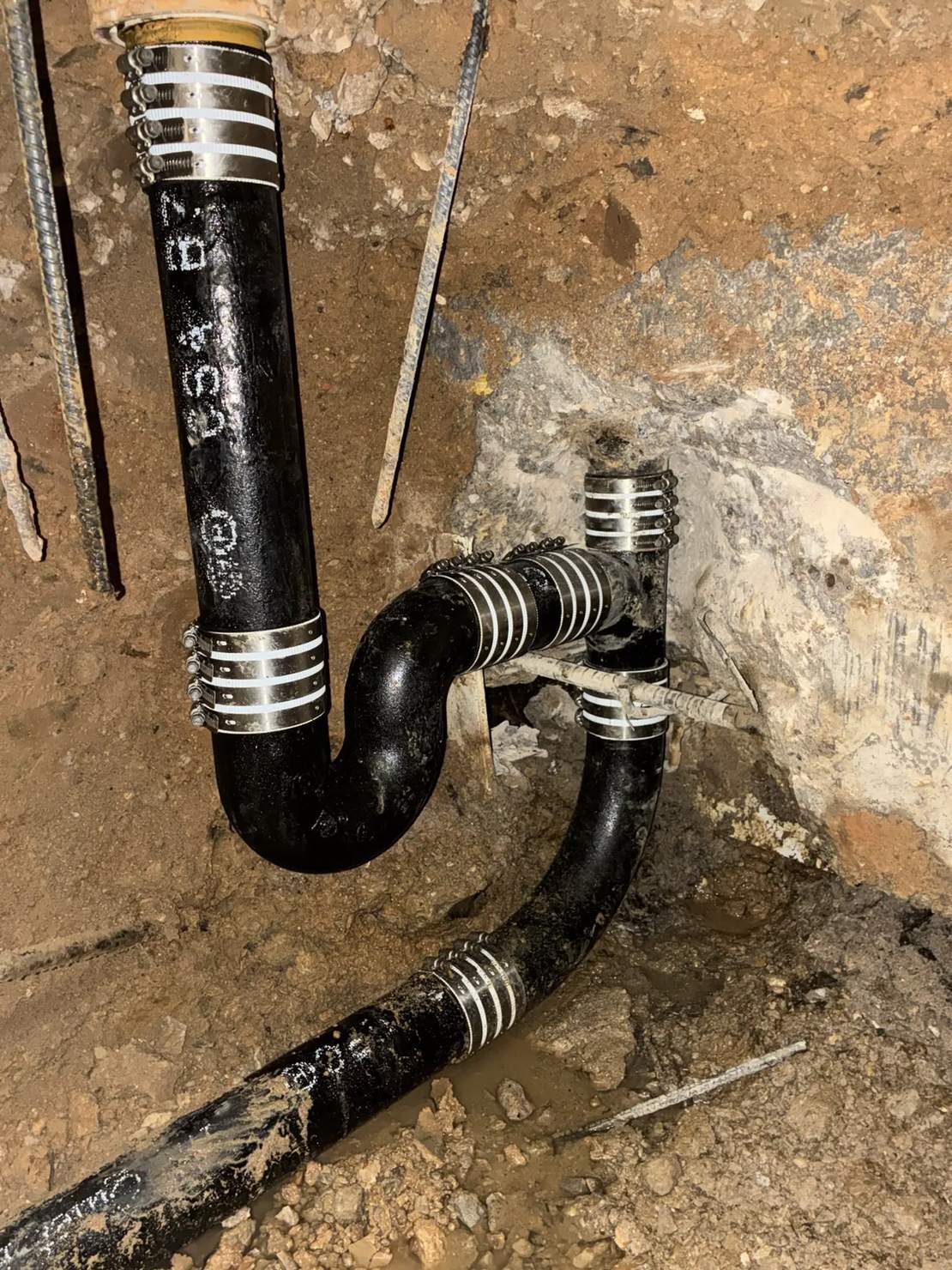
We replaced a damaged section of cast iron drain under a slab and kept it cast iron to tie into the existing line. Every joint uses a heavy-duty no-hub coupling with a full stainless steel shield, not a plain rubber boot with two hose clamps.
Why the coupling matters
North Texas sits on expansive clay soil that swells when wet and shrinks when dry. That movement puts stress on pipes under a slab. A plain rubber coupling can sag or shift over time, and when it does, the joint can leak or catch debris, and you're back under the slab.
Heavy-duty shielded couplings hold the pipes in line and resist that movement.
Repair or replace cast iron?
Cast iron drains were standard in many older North Texas homes. Cast iron can last a long time, but it eventually scales, cracks, and corrodes from the inside. If a camera inspection shows one bad section on an otherwise solid line, a repair like this makes sense. If the line is failing in several places, replacing the whole run is usually the better long-term value.
What to ask before an under-slab cast iron repair
- Has the whole line been camera-inspected, not just the problem spot?
- What type of couplings will be used?
- Will the line be tested before backfill?