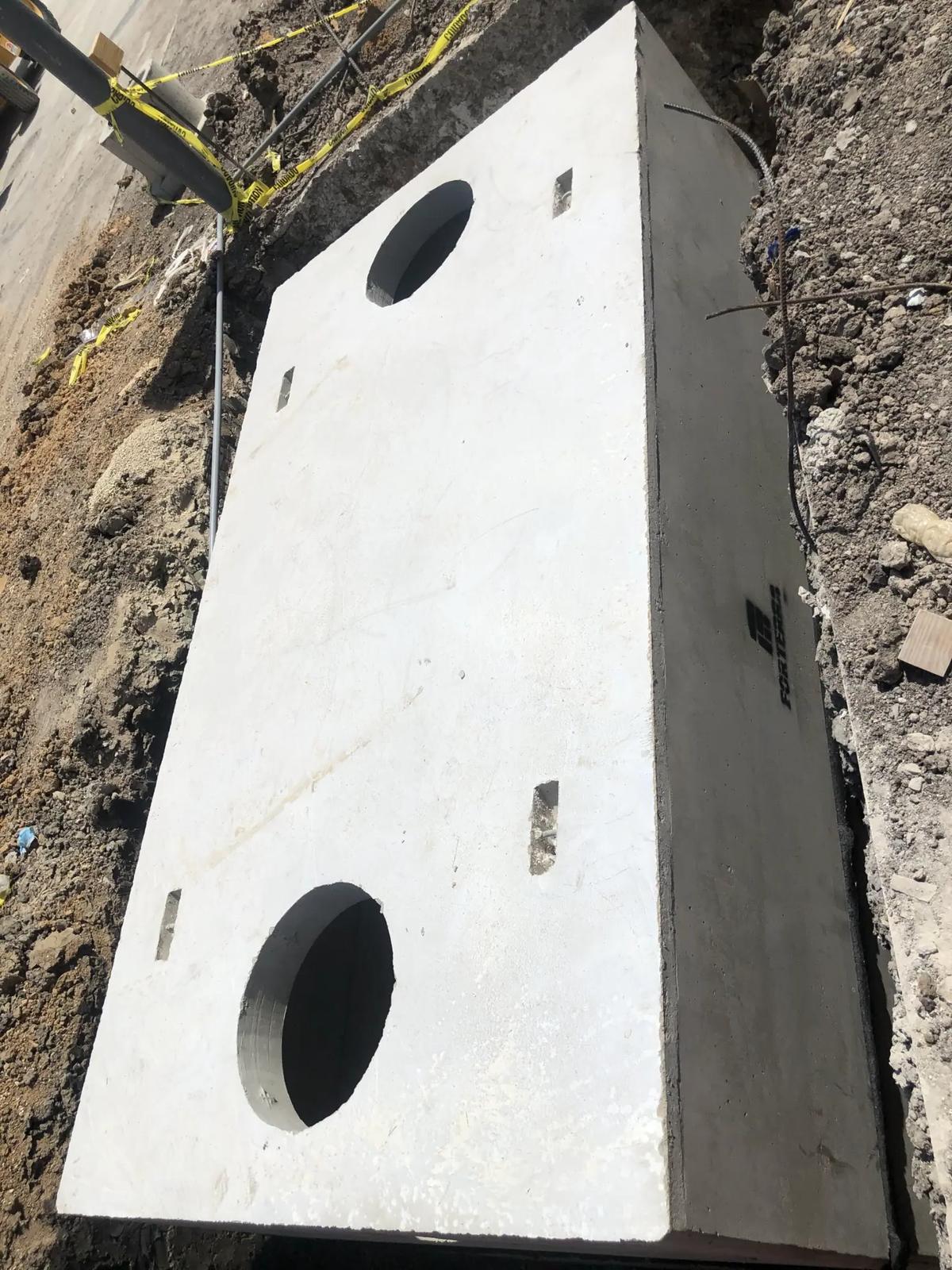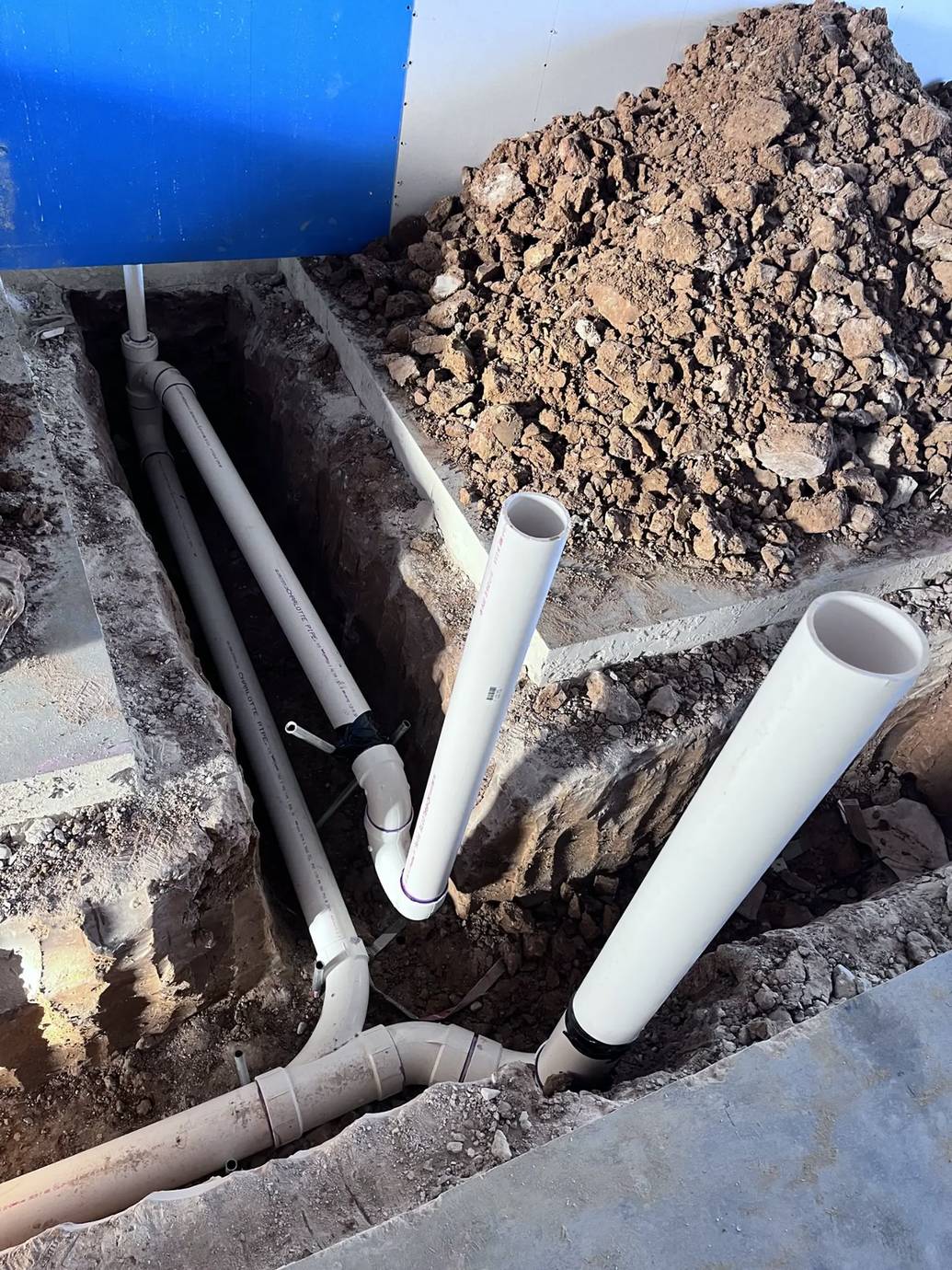
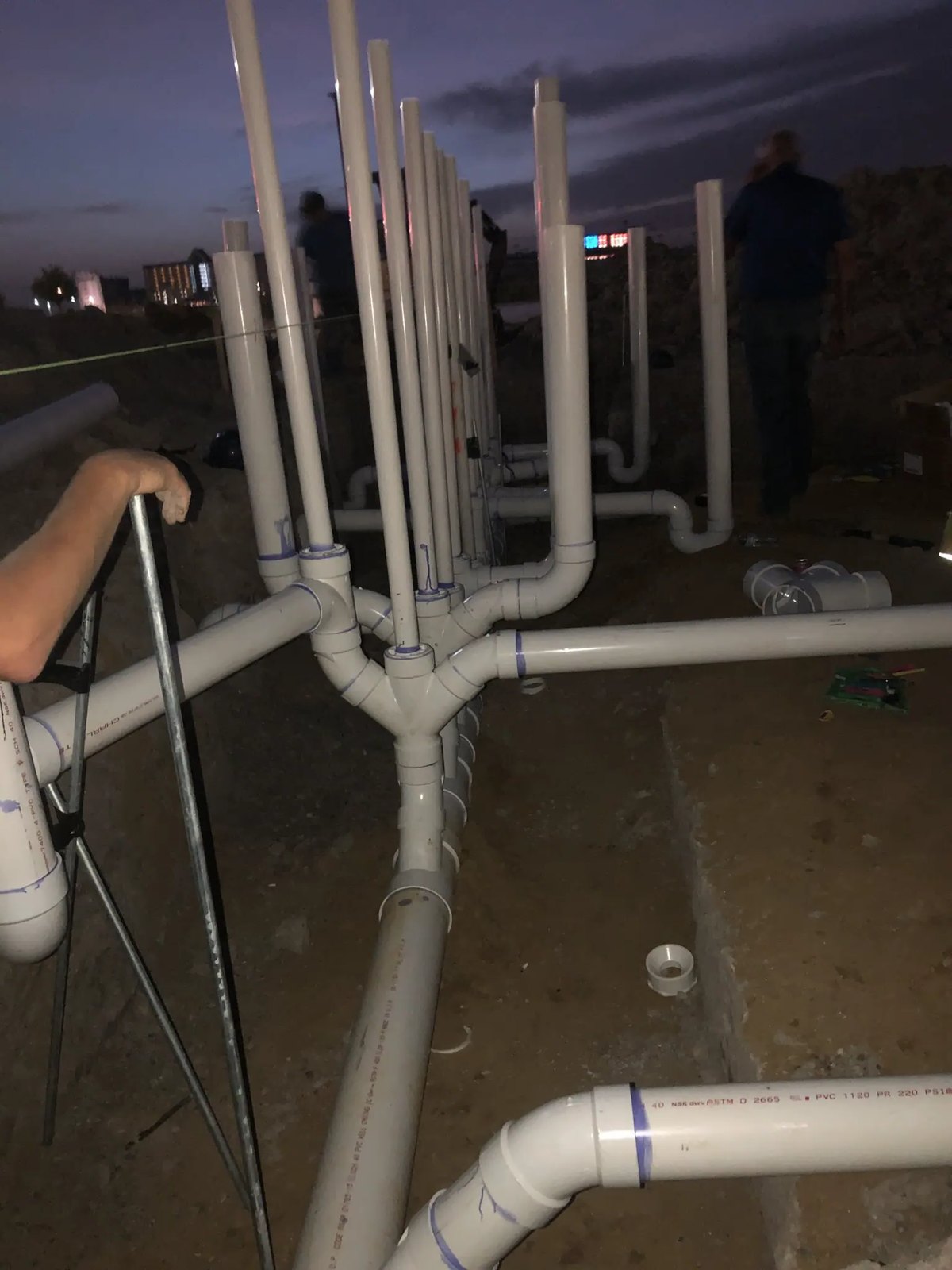
On a new commercial building, the underground plumbing is the part nobody sees, and the part that's hardest to fix later. These photos are from a commercial food-service job: the underground drain, waste, and vent lines, and the concrete grease interceptor that serves the kitchen.
Why underground rough-in has to be exact
Every pipe sticking up out of the ground has to land exactly where a fixture will be: a floor drain, a sink, a toilet, a mop sink. Those fixtures don't exist yet. Once the concrete is poured, moving a drain means cutting the slab.
That's why we lay it out carefully, cap the stub-ups, and test the system before the pour.
Grease interceptors
Restaurants and commercial kitchens need a grease interceptor to keep fats, oils, and grease out of the city sewer. Size, location, and maintenance requirements vary by city in North Texas, so the interceptor has to be planned with the local requirements in mind.
What a general contractor or owner should expect from the plumber
- A layout that matches the current plans
- Underground tested before the pour
- Clear communication about inspections
- Stub-up locations verified before concrete