
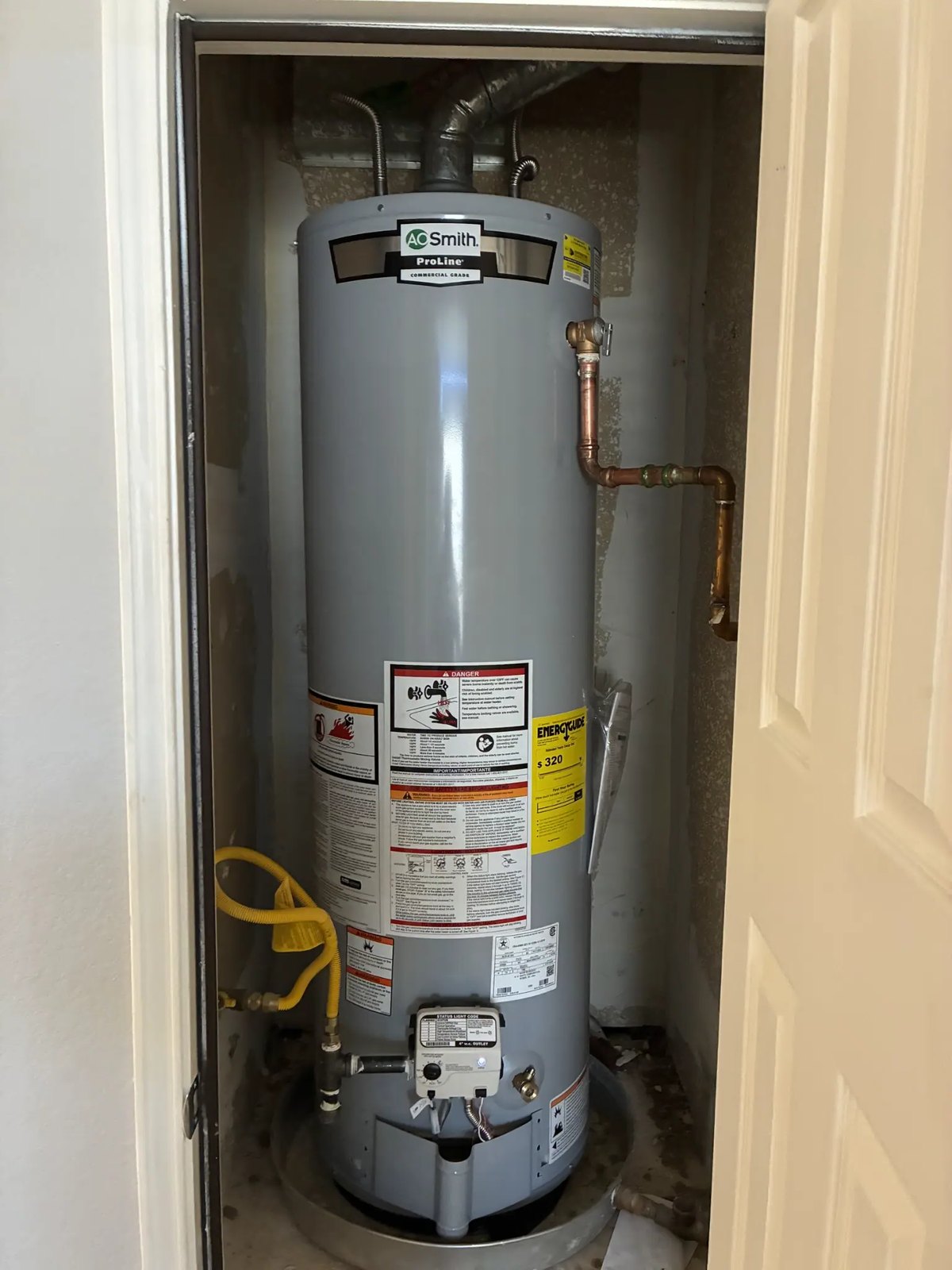
We recently installed this gas water heater in a home in the neighborhood behind Topgolf in Allen. It's a standard closet install, but it's a good example of the details that get skipped when a water heater is DIY'd or installed by whoever gave the cheapest quote.
Here are the five mistakes we fix most often.
1. No sediment trap on the gas line
The sediment trap (also called a drip leg) is the capped tee below the gas valve. It catches debris in the gas line before it reaches the water heater's gas control. Code requires it, and a surprising number of installs don't have one.
2. The relief valve line is done wrong
The temperature and pressure (T&P) relief valve is the most important safety device on the tank. Its discharge line must:
- Be the full size of the valve outlet
- Run downhill the entire way
- End without threads
- Never be capped, plugged, or reduced
If that valve ever opens, you want scalding water going somewhere safe, not inside a wall or onto someone's feet.
3. No drain pan
Every tank leaks eventually. When a water heater sits in a closet or attic, it needs a pan underneath, and that pan needs a drain line that goes somewhere water can actually escape.
4. No expansion tank on a closed system
If your home has a pressure reducing valve or a check valve on the water line, heated water has nowhere to expand. That causes a dripping relief valve, a toilet that runs on its own, and pressure spikes through the whole house. An expansion tank fixes it. (We wrote more about this in our post on expansion tanks.)
5. Bad venting
Gas water heaters need the correct vent size, slope, and clearances. A poorly vented water heater can push carbon monoxide back into the home. This is the one part we'd never let anyone guess at.
Can you replace a water heater yourself?
Some handy homeowners can. But the gas connection and the venting are where mistakes become dangerous, and many North Texas cities require a permit for water heater replacement. If you're not sure, have a licensed plumber handle it or at least check it.