
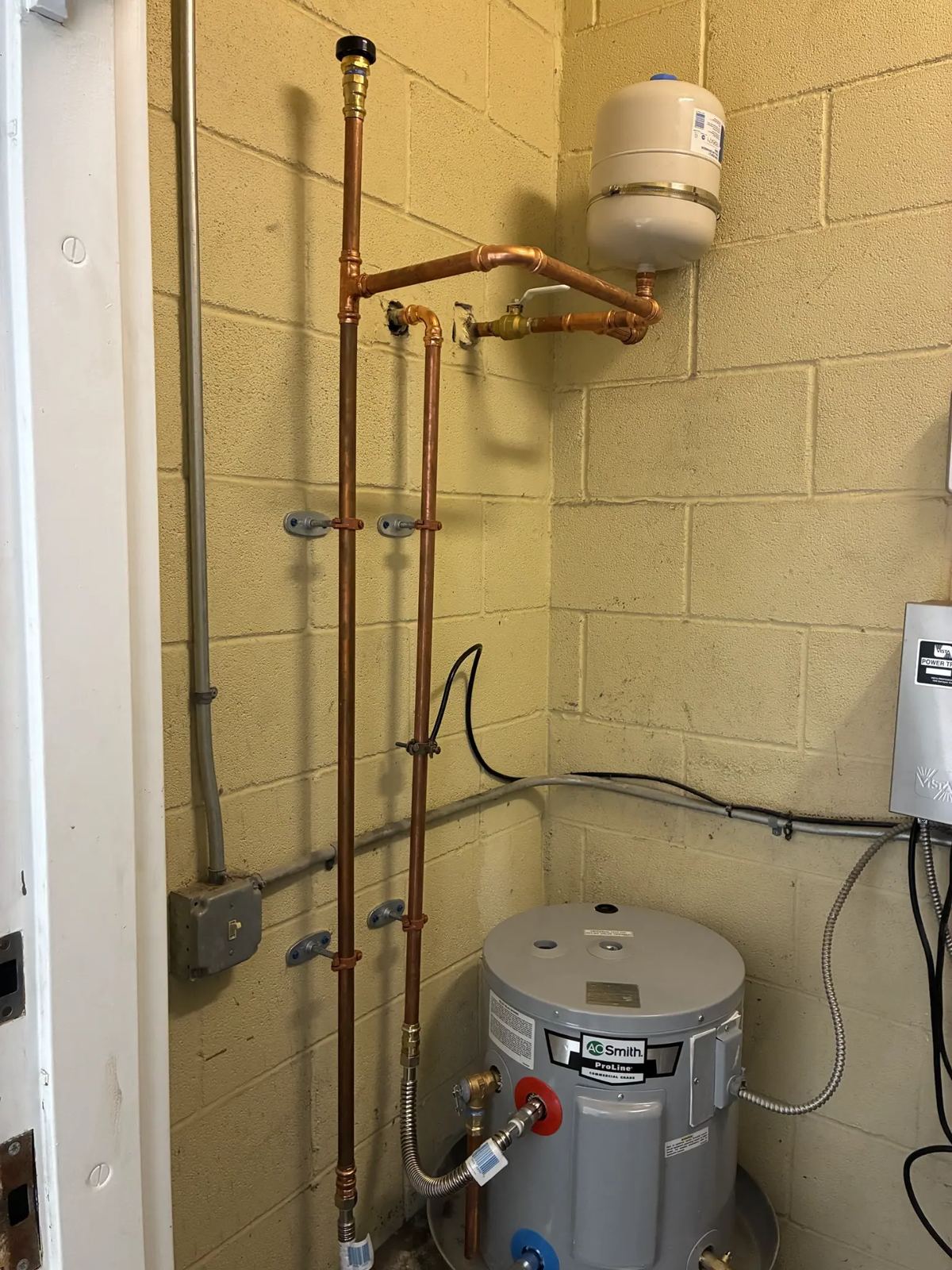
We installed this water heater off 121 and Preston, near Stonebriar in Frisco. The white tank mounted up top is a thermal expansion tank, and it's one of the most commonly missing parts we find on water heaters around North Texas.
What a thermal expansion tank does
Water expands when it's heated. In many homes, a pressure reducing valve or check valve where the water line comes in keeps that expanded water from flowing back toward the city main. Plumbers call that a "closed system."
In a closed system, every time the water heater runs, the extra volume has nowhere to go, so pressure spikes through the whole house. An expansion tank has an air cushion inside that absorbs that extra water and keeps pressure steady.
Signs you might be missing one
- Your water heater's relief valve drips
- A toilet runs on its own for a few seconds at random times
- Faucets start dripping
- Water heaters or fixtures seem to wear out early
How to check your own water heater
Look at the cold water pipe going into the top of your water heater. If you don't see a small tank teed into that line, and your home has a pressure reducing valve, it's worth having a plumber take a look.
A hose-bib pressure gauge from any hardware store (about $10) will also tell you if your house pressure is too high. Plumbing code limits house pressure to 80 psi.
Expansion tanks wear out too
Expansion tanks don't last forever. If the air charge is lost or the inner bladder fails, the tank stops doing its job. A quick tap test isn't reliable. A plumber can check the air charge and whether the tank is waterlogged.