
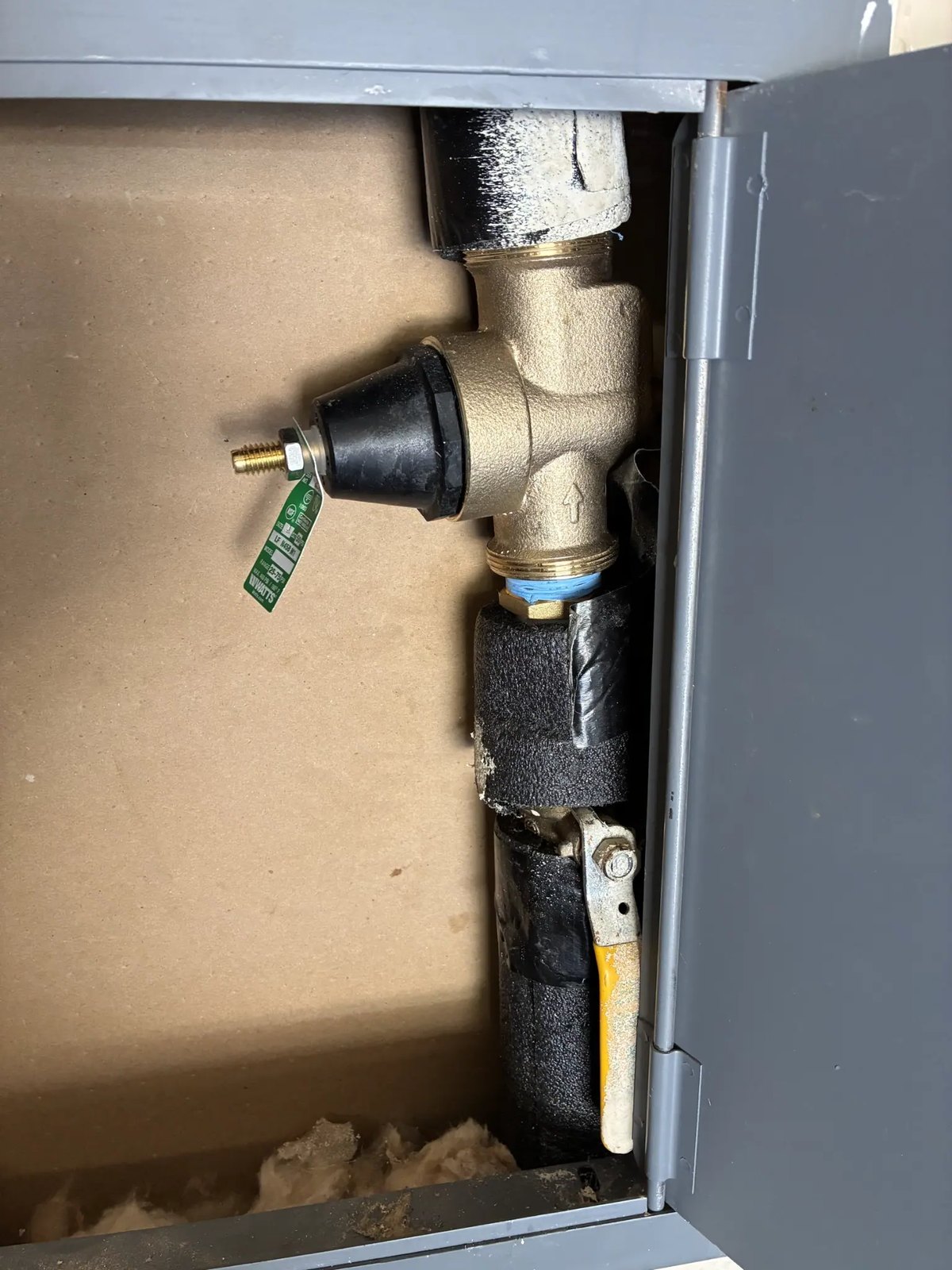
Many homes in North Texas have a pressure reducing valve, or PRV, on the main water line where it enters the house. It's often inside a box like the one in the photo, on an outside wall or in the garage. Its job is to lower city water pressure to a safe level for your home.
PRVs wear out. When they do, pressure inside the house creeps up, and most people don't notice until something starts leaking.
Signs your water pressure is too high
- Banging or hammering pipes
- A toilet that runs on its own
- Faucets that start dripping
- A water heater relief valve that drips
- Washing machine hoses, faucets, and appliances that fail early
The $10 test
Buy a hose-bib pressure gauge at any hardware store. Screw it onto an outside faucet and turn the faucet on. Check it in the morning and again at night, since city pressure can change through the day.
Plumbing code limits home water pressure to 80 psi. If your reading is higher than that, your PRV may be failing or need adjusting.
The fix
If the PRV has failed, it gets replaced. While we're there, we check whether the home has a thermal expansion tank on the water heater. Once a PRV is in place, the system is closed, and an expansion tank is needed to handle the pressure from heated water.