
Start with the details
Clarify the drainage pattern: which fixtures are affected, whether the condition is isolated or widespread, when it started, and what actions or events preceded it.
Reduce wastewater disruption
Commercial drain and sewer requests involving slow fixtures, backups, odors, wastewater, and operational impact.
Commercial scope, access, authorization, and timing reviewed before scheduling
What may be evaluated
Clarify the drainage pattern: which fixtures are affected, whether the condition is isolated or widespread, when it started, and what actions or events preceded it.
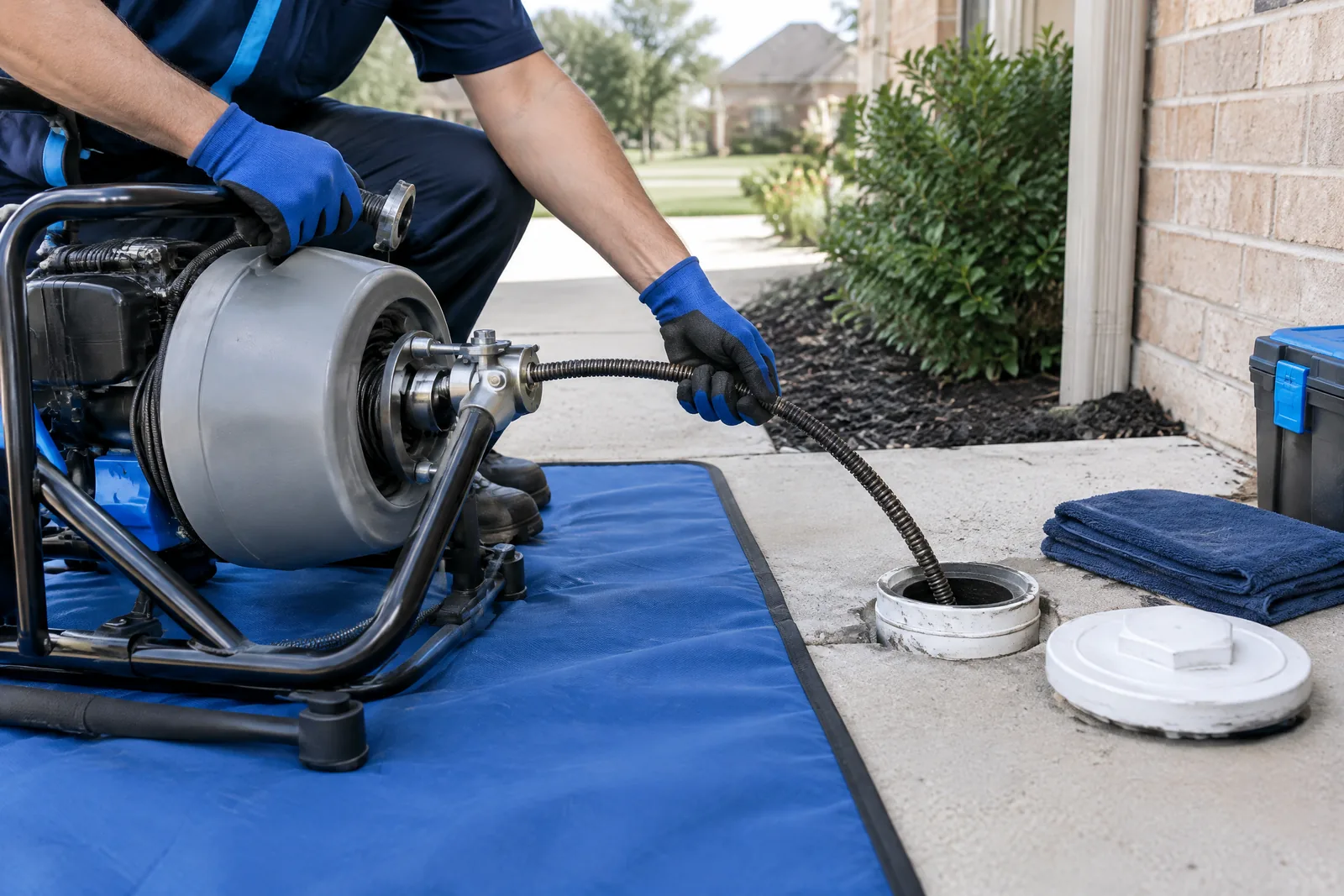
With property authorization and safe access, evaluate affected fixtures, accessible drains, and available cleanouts or other approved access points for observable conditions.
Consider whether observations point more toward an individual fixture/drain, a shared building drain or sewer path, or a condition that may also require coordination with the property owner, manager, or local wastewater utility. Symptoms alone do not establish responsibility or cause.
Discuss operational constraints such as customer-facing areas, food-service processes, tenant spaces, sanitation needs, access windows, and any site safety rules before deciding next steps.
Prepare the request
Do not take a photo or gather information if doing so would put you near water, sewage, gas, electricity, traffic, or another unsafe condition.
What to expect
The team reviews the property, operational impact, access, authorization, and requested scope before confirming the next step.
Include the address, affected area, business impact, access, and authorization.
The team confirms whether the request fits the current scope and schedule.
Work proceeds only after the relevant scope, terms, and pricing are discussed.
Clear answers
Need help with a specific situation? Call or text and describe what is happening.
(469) 734-0431Stop using the affected fixtures when doing so is practical, keep customers and staff away from standing wastewater or slippery areas, and note where the issue appears. Share the business address, affected fixtures, start time, and whether wastewater is visible when requesting help. Avoid direct sewage contact and do not attempt hazardous access or cleanup beyond your site’s established safety procedures.
Not necessarily. A slow drain may be limited to one fixture or may be part of a broader drainage pattern. Information such as the number of affected fixtures, whether a lower drain backs up when another fixture is used, and when the condition occurs helps guide an evaluation; it does not confirm a cause by itself.
Kitchen operations can be relevant because fats, oils, grease, food debris, and wastewater practices can affect drainage systems. EPA and City of McKinney guidance identify fats, oils, and grease as potential blockage contributors. Describe the kitchen activity, any grease-management equipment, recent service, and the affected fixtures, but do not assume the kitchen is the cause before the condition is evaluated.
A property should follow its local utility’s reporting instructions, especially when wastewater is flowing in a street or from a public utility structure, or when the utility asks to be notified. A backup inside a building does not by itself establish whether the issue is private plumbing or a public-system condition, so preserve useful details and coordinate with the property owner, manager, and utility as applicable.
Provide the full address and suite, a site contact with access authority, business type, affected areas and fixtures, the start time and pattern of the problem, any recent changes or prior service, visible wastewater or safety hazards, and access or operating restrictions. This supports appropriate request review without promising a diagnosis, price, or timing.
Related decisions
Commercial toilet, urinal, faucet, lavatory, flush-valve, floor-drain, and restroom fixture requests.
Review this servicePlanned commercial plumbing reviews for recurring drains, leaks, fixtures, water use, records, and site priorities.
Review this servicePlanning and safety sources
These resources support general safety and planning information. They do not diagnose the property or replace the authority responsible for the specific address.
Get a clear next step
Send the address and what is happening. Include the operating impact, access, and authorization.