
Start with the details
Begin with the customer’s symptom history, affected fixtures, when the issue occurs, and whether wastewater has emerged anywhere on the property.
Understand multi-fixture and main-line symptoms
Evaluation requests for recurring backups, several affected fixtures, cleanouts, laterals, and utility coordination.
$49 service call • Repair price provided before work
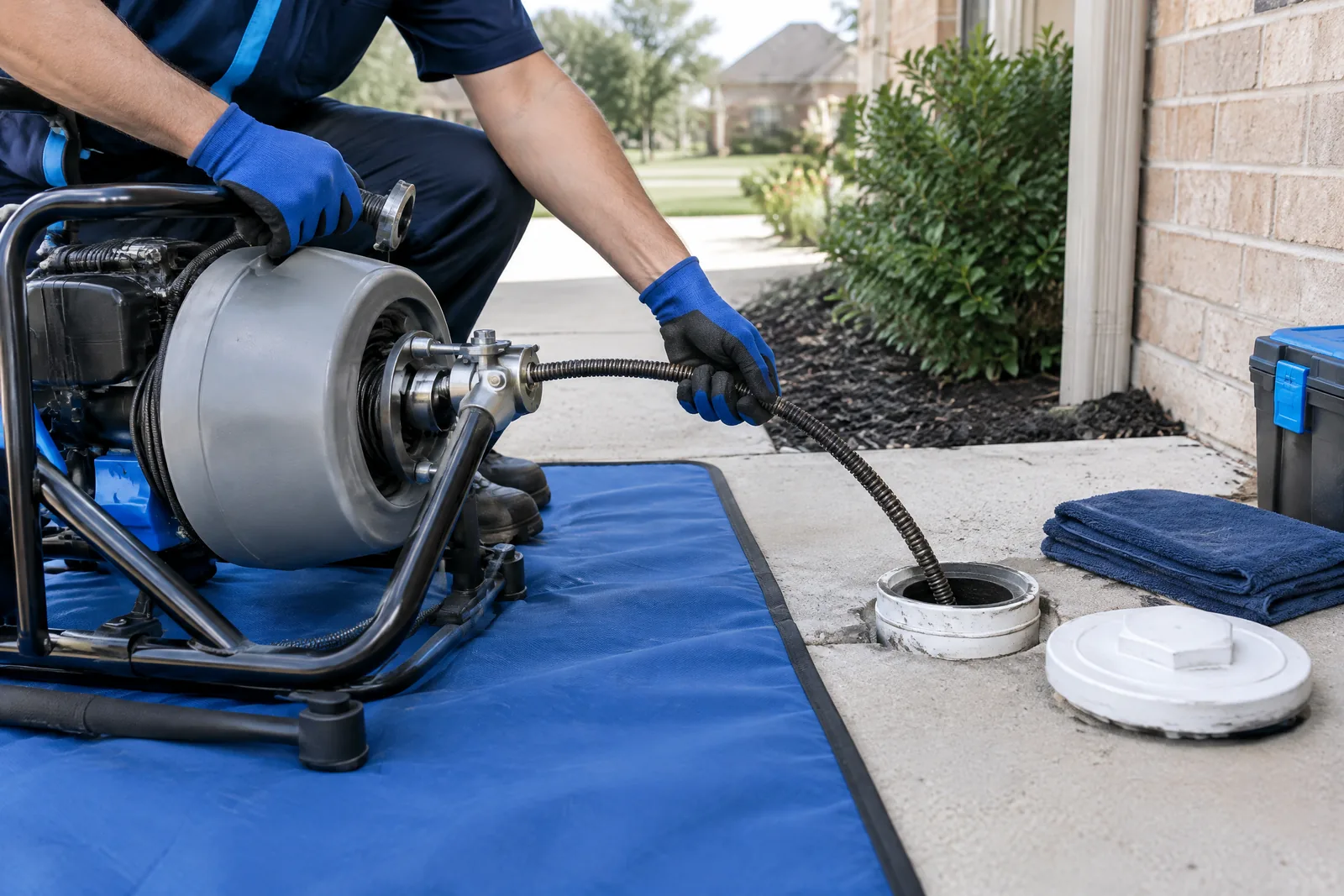
What may be evaluated
Begin with the customer’s symptom history, affected fixtures, when the issue occurs, and whether wastewater has emerged anywhere on the property.
Consider available access points, such as an exterior or property-line cleanout, without assuming that one is present or accessible. McKinney directs residents needing help locating a sewer cleanout to Public Works.
Differentiate, where information allows, between a fixture or interior-drain concern, a private service-line concern, and a condition that should be reported to the local wastewater utility. A field evaluation may not establish responsibility or a final repair scope at the initial visit.
Review visible site constraints and discuss whether further investigation, local utility coordination, code/permit review, utility locating, clearing, repair, or another next step may be appropriate. Do not present any method as presumed necessary.
Prepare the request
Do not take a photo or gather information if doing so would put you near water, sewage, gas, electricity, traffic, or another unsafe condition.
What to expect
The $49 service call covers the visit and evaluation. Any repair price is presented separately for approval.
Share the address, symptoms, and urgency.
The plumber evaluates the issue and explains what was found.
Choose whether to proceed after reviewing the proposed scope and price.
Clear answers
Need help with a specific situation? Call or text and describe what is happening.
(469) 734-0431Multiple fixtures draining poorly, gurgling, or wastewater coming up at a low fixture or cleanout can justify a sewer-line evaluation request. These signs are not conclusive: a plumbing professional may need to consider the symptom pattern, accessible plumbing points, and local utility information before recommending next steps.
Limit water use immediately and keep people and pets out of the affected area. Avoid direct contact with sewage, which EPA says can contain organisms that cause disease. If sewage is in the street or neighbors are experiencing a similar stoppage, contact the local wastewater utility; use 911 for an immediate life-safety emergency.
They can contribute, but they should not be presented as a confirmed cause without evaluation. McKinney warns that wipes, paper towels, personal-care products, fats, oils, and grease can clog plumbing or sewer pipes; EPA also identifies grease, certain household products, and roots entering defects as potential blockage factors.
It depends on the line location, the municipality’s policy, and the condition involved. A nearby North Texas municipal policy distinguishes private-property service lines from public mains and right-of-way work, illustrating why the property owner should confirm the issue with the applicable local utility rather than rely on a general rule.
Requirements depend on the location and scope of work. Confirm permit and inspection requirements with the applicable municipal authority. Before planned excavation, follow Texas 811 and local requirements so underground facilities can be identified; do not assume marked lines identify private facilities or settle every site condition.
Related decisions
Planning and safety sources
These resources support general safety and planning information. They do not diagnose the property or replace the authority responsible for the specific address.
Get a clear next step
Send the address and what is happening. Standard residential service call: $49.